Protein targets on a GLP-1: how to set a useful range
There is no single protein target for everyone taking a GLP-1 medication. A useful range depends on body size, age, activity, total energy intake, rate of weight loss, kidney health, food tolerance, and guidance from a licensed clinician or registered dietitian. The practical goal is adequate protein across the day, paired with resistance activity and enough overall nutrition, not chasing the highest number possible.

GLP-1 medications such as semaglutide and tirzepatide can reduce appetite. That may support weight loss alongside diet and exercise, but it can also make it easier to miss protein and other nutritional needs. A range is useful only if you can tolerate it and apply it consistently.
What is a reasonable protein target on a GLP-1?
For general orientation, the edit. protein calculator uses body weight and goal to estimate a range within roughly 0.5 to 1 gram of protein per pound of body weight per day. That is a broad educational range, not a prescription. The lower and upper ends can produce very different totals, especially at a higher body weight.
A target based on current scale weight may overestimate what is useful for some people. A clinician or dietitian may consider other measures instead. There is no special protein equation unique to semaglutide or tirzepatide.
Use the calculator as a starting conversation:
- Estimate a range.
- Compare it with what you currently eat on a typical day.
- Choose a realistic point rather than automatically selecting the maximum.
- Divide that amount across meals or smaller eating occasions.
- Revisit it if your appetite, weight, training, health, or tolerance changes.
If you have kidney disease or another condition that changes how your body handles protein, do not raise your intake based on a calculator alone.
Why does protein matter during weight loss?
Protein supplies amino acids used to maintain and repair tissues. It supports muscle, skin, enzymes, immune function, and many other normal processes. Protein foods can also contribute to fullness, although fullness is not always helpful when a GLP-1 already makes eating difficult.
Weight loss changes more than body fat. Some fat-free or lean tissue often decreases along with fat mass. Adequate protein and resistance activity are practical supports for preserving strength and function, but neither can promise that all lean tissue will be maintained.
That distinction matters because “lean mass” is not the same as skeletal muscle. Lean mass measurements include body water, organs, connective tissue, and other fat-free components. A scan showing a change in lean mass cannot be read as a one-to-one measurement of muscle loss. A 2026 meta-analysis of randomized trials found that GLP-1 receptor agonist treatment was associated with absolute lean-mass reductions while lean mass as a proportion of body weight improved. [1] Both findings can be true when fat mass decreases more than lean mass.
Do GLP-1 medications cause muscle loss?
The more precise answer is that weight loss, including weight loss during GLP-1 treatment, can include a reduction in lean mass. The amount and meaning vary by person, method of measurement, degree of weight loss, nutrition, activity, age, and other health factors.
It is inaccurate to say that a GLP-1 medication simply “eats muscle.” It is also too confident to promise that a high-protein diet will prevent every change. Research is still refining how best to support body composition during treatment.
A small 2026 prospective cohort reported lower energy intake and nutritional gaps during GLP-1 therapy, reinforcing the practical need to watch overall diet quality when appetite falls. [2] A separate randomized trial is underway to test a structured protein and resistance-exercise intervention during semaglutide or tirzepatide treatment. [3] Because that trial is a protocol rather than a completed result, it tells us the question is important, not that the intervention has already been proven in this exact setting.
The useful focus is functional: Are you eating enough to support daily life? Can you maintain or build strength? Are you recovering from training? Are you becoming unusually weak, fatigued, or unable to tolerate food? Those questions belong alongside scale weight.
Which factors change your protein target?
A range becomes more useful when it reflects the person using it. Important variables include:
- Body size and body composition. Current weight alone may not be the best basis for every person.
- Age and frailty risk. Older adults may need more deliberate attention to protein distribution and strength, while complex health conditions require individual planning.
- Activity and resistance training. A person training regularly may have different needs from someone who is sedentary or recovering from illness.
- Rate of weight loss. Fast loss can make it harder to maintain adequate energy and nutrients.
- Total energy intake. Protein cannot compensate for chronically inadequate calories, fluids, fiber, vitamins, and minerals.
- Food tolerance. Nausea, reflux, constipation, vomiting, or pronounced fullness can change what is practical.
- Kidney and liver health. Some conditions require individualized limits or monitoring.
- Pregnancy or breastfeeding. Nutrition needs and medication decisions require direct clinical care.
- Eating-disorder history. Tracking grams and pursuing weight loss can be harmful for some people and should be approached with specialized support.
The highest number is not automatically the healthiest target. More protein can crowd out produce, whole grains, healthy fats, and overall dietary variety. A balanced plan should still be recognizable as food, not a spreadsheet built around one nutrient.
How can you meet a target when appetite is low?
Start with the foods that matter most while your appetite is available. Many people tolerate smaller portions better than a large plate. Try distributing protein over three or four eating occasions instead of saving most of it for dinner.
Low-volume options may include eggs, Greek yogurt, cottage cheese, fish, chicken, tofu, tempeh, beans, lentils, or a milk-based or soy-based drink. Choose foods that fit your dietary pattern and sit comfortably. A protein powder or ready-to-drink shake can be convenient, but it is not mandatory and should not replace all meals.
A simple pattern is:
- choose a protein source first
- add a fruit, vegetable, or other tolerated fiber source
- include enough carbohydrate and fat to support energy and satisfaction
- sip fluids across the day rather than forcing a large amount with meals
If nausea is active, very rich or greasy protein foods may feel harder to tolerate. Cooler foods, plain preparations, or smaller portions may be easier for some people. Do not force a target through repeated discomfort. Persistent symptoms deserve a conversation with the prescribing team. The guide to managing GLP-1 side effects offers additional practical context.
Does protein timing matter?
Consistency and distribution are usually more practical than a perfect clock. Spreading protein across the day creates several manageable opportunities to eat it and may be easier than one very large evening serving.
You do not need to turn every meal into an exact calculation. If your daily range is 90 grams, for example, you might think in terms of three meals that each contribute a meaningful portion, with a smaller snack if needed. That example shows the method, not a recommendation that 90 grams fits everyone.
After resistance training, include a meal or snack with protein when it is comfortable and fits your day. The broader pattern matters more than racing to consume a supplement within a narrow window.
Why does resistance work belong beside protein?
Protein provides building material. Resistance activity gives muscle a reason to adapt and remain useful. That can include weight training, resistance bands, machines, or body-weight movements matched to your ability.
Evidence outside the GLP-1 setting supports combining adequate protein with intensive exercise during an energy deficit, but results from a demanding trial in young men should not be generalized to every adult taking a GLP-1. [4] The GLP-1-specific intervention evidence is still developing. [3]
Start from your current capacity. A qualified professional can help adapt exercise for pain, balance concerns, cardiovascular conditions, recent surgery, or a long period of inactivity. The aim is steady function and progressive strength, not punishment for eating or a race against the scale.
When should you ask for individualized nutrition help?
Contact your care team if you are repeatedly vomiting, cannot keep down fluids, are unable to meet basic nutrition needs, or notice worsening weakness, dizziness, or a rapid unplanned change. Those concerns may require a medication review as well as nutrition support.
Get individualized guidance before substantially increasing protein if you have kidney disease, significant liver disease, pregnancy, breastfeeding, frailty, a history of an eating disorder, or another condition that affects nutrition. A registered dietitian can translate a target into foods, portions, and a plan that respects symptoms and preferences.
Medication should support diet and exercise, not make adequate nourishment impossible. The plan can be adjusted.
Explore care at the edit.
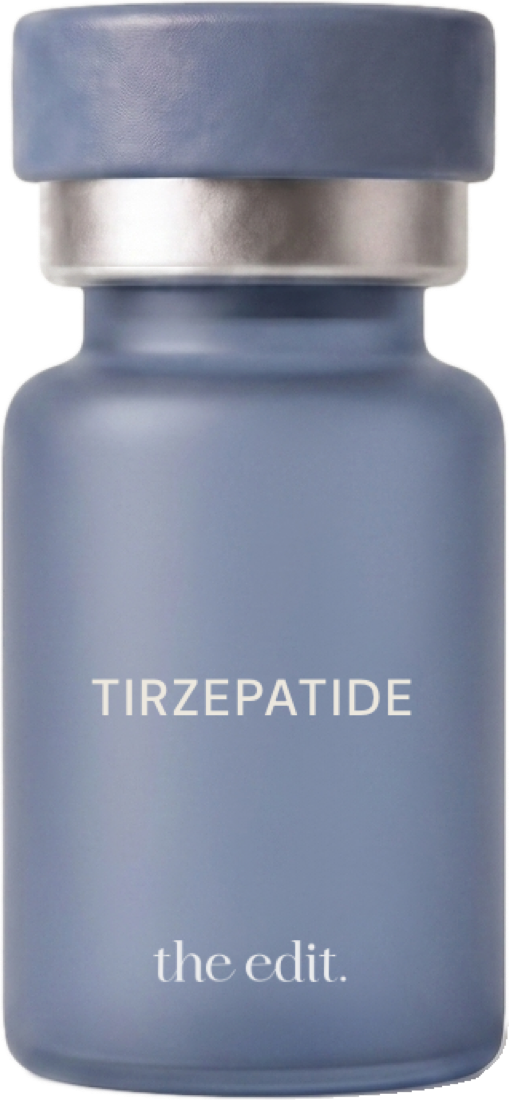
Tirzepatide is prescribed only if a licensed provider determines it fits your health history. Medication ships from a licensed U.S. pharmacy. If you are not approved, you are not charged.
The product linked above is compounded tirzepatide. Compounded drugs are not FDA-approved, and this product is not affiliated with, endorsed by, or a substitute for Mounjaro or Zepbound.
The Edit Health LLC provides management and administrative support. It does not practice medicine and is not a pharmacy. A licensed provider at Arora Health & Aesthetics, LLC reviews your health history, nutrition context, goals, and current medications. If treatment is appropriate and prescribed, The Pharmacy Hub, a licensed U.S. pharmacy, dispenses the medication. Ongoing care gives you a place to discuss tolerance, dosing, and nutrition. If you are not approved, you are not charged.
Frequently asked questions
How much protein should I eat on a GLP-1?
There is no universal amount. A broad calculator range can orient you, but a useful target depends on body size, age, activity, energy intake, kidney health, and food tolerance. A licensed clinician or registered dietitian can personalize it.
Is lean mass the same as muscle?
No. Lean mass includes skeletal muscle, but it also includes water, organs, connective tissue, and other fat-free components. A lean-mass change is not a direct measurement of muscle alone.
Can protein prevent all muscle loss during weight loss?
No strategy can guarantee that. Adequate protein and resistance activity may support strength and lean tissue during weight loss, but individual results vary and the GLP-1-specific evidence is still developing.
What if protein foods make nausea or fullness worse?
Try smaller portions, simpler preparations, and several eating occasions. Choose tolerated protein foods and discuss persistent nausea, vomiting, or inability to eat with your prescribing team rather than forcing a gram target.
Who should not raise protein without clinical guidance?
People with kidney or significant liver disease, pregnancy, breastfeeding, frailty, eating-disorder history, or other conditions that affect nutrition should seek individualized guidance first.
Sources
- 2026 systematic review and meta-analysis of randomized trials on GLP-1 receptor agonists and muscle health: PubMed 42321502
- CRAVE prospective cohort, 2026, on diet quality, intake, and body composition during GLP-1 therapy: PubMed 42440974
- LEAN-PREP randomized-trial protocol testing protein and resistance exercise with semaglutide or tirzepatide, 2026: PubMed 42020128
- Randomized energy-deficit trial comparing 1.2 vs 2.4 g/kg/day protein with intensive exercise, not GLP-1-specific: PubMed 26817506
Talk it through with a provider.
An online visit takes minutes. A licensed provider in your state reviews your health history and decides whether treatment is appropriate. If you are not approved, you are not charged.
View the tirzepatide protocolAdd the edit. as a preferred source in Google. Our guides will then carry a preferred badge in your own results.