Full refund if you are not approved. Prescriptions are issued only if a licensed provider determines treatment is appropriate for you.
How it works
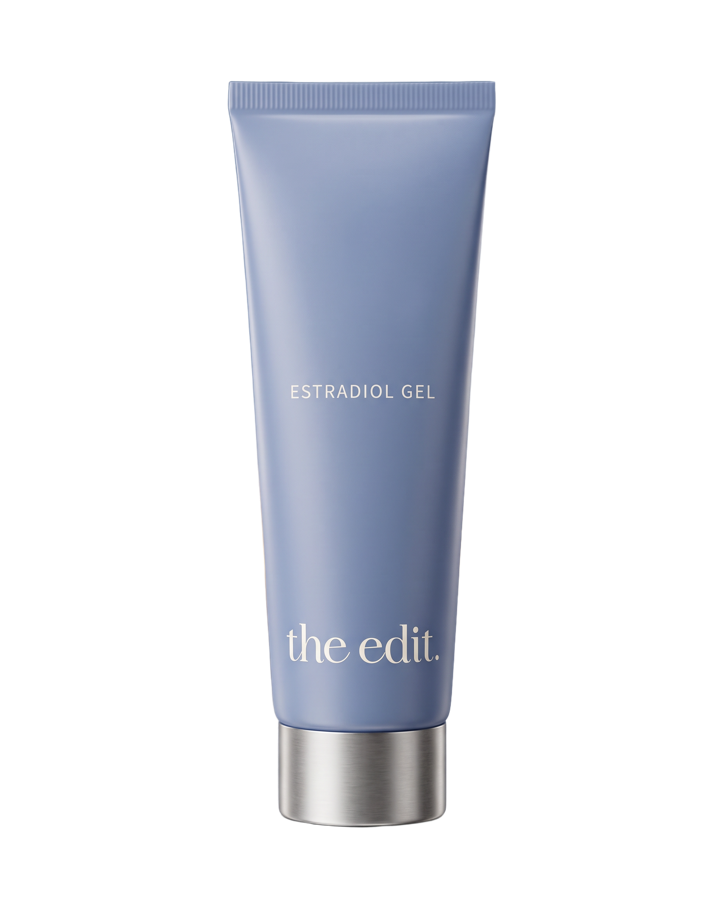
Estradiol is a form of estrogen, the hormone that declines through perimenopause and menopause. A compounded estradiol protocol is prescribed and dosed by a licensed provider, in the form that fits you: transdermal patch, daily gel, oral tablet, or vaginal cream.
Choose your form
Your provider helps you choose the delivery that fits your routine and history: patch, gel, tablet, or vaginal cream.
Benefits
Hot flash support
Systemic estrogen therapy may help reduce hot flashes and night sweats.
Vaginal comfort
Local vaginal estrogen may help relieve vaginal dryness and discomfort.
Sleep support
May help with sleep disrupted by hot flashes or night sweats.
Individualized treatment
Your clinician selects the form and dose for your symptoms and history.
Perimenopause and menopause.
Who it's for
Perimenopause is the transition before your final period, when estrogen and progesterone begin to fluctuate and decline. Menopause is the point twelve months after your last period. Estrogen affects nearly every system in the body, which is why its decline can be felt in so many ways at once.
Why estradiol. Estradiol replaces the estrogen your body is making less of, addressing the source of many symptoms rather than masking them one at a time. A licensed provider chooses the form and dose for you and adjusts it over time.
What it treats
As estrogen declines through perimenopause and menopause, the effects reach well beyond hot flashes. Estradiol is used to relieve the symptoms driven by that decline.
Common questions.
How it works
Estradiol replaces the estrogen your body makes less of during the menopause transition. Your provider selects the delivery and dose, and adjusts over time based on how you feel.
Which form is right for me?
Patch, gel, tablet, and vaginal cream each suit different routines and needs. A patch is low-maintenance, gel is flexible, tablets are familiar, and vaginal cream targets local comfort. Your provider recommends the fit.
Potential side effects
Estrogen therapy can cause breast tenderness, spotting, headache, or nausea, especially early on. Your provider reviews your history and monitors your response.
Who should avoid it
Estrogen is not appropriate for everyone. A history of certain cancers, blood clots, liver disease, or unexplained bleeding may rule it out. Your provider screens for this before prescribing.
Do I need progesterone too?
If you have a uterus, estrogen is usually paired with progesterone to keep the protocol balanced. Your provider determines what you need.
How long until I feel a difference?
Many people notice changes over the first several weeks. Your provider adjusts your dose over time based on how you feel.
Is hormone therapy right for me?
Hormone therapy is not appropriate for everyone. A licensed provider reviews your health history to determine whether treatment is appropriate for you.
Where is this available?
Availability varies by state and is confirmed during your intake.
Estradiol is a form of estrogen, the hormone that declines through perimenopause and menopause. A compounded estradiol protocol is prescribed and dosed by a licensed provider, in the form that fits you: transdermal patch, daily gel, oral tablet, or vaginal cream.
Choose your form
The system
Your provider helps you choose the delivery that fits your routine and history: patch, gel, tablet, or vaginal cream.
Full refund if you are not approved. Prescriptions are issued only if a licensed provider determines treatment is appropriate for you.
Prescription medication
Choice of delivery form
Clinician visit & ongoing care
Temperature-controlled 2-day shipping
What it treats
What it treats
More than hot flashes.
As estrogen declines through perimenopause and menopause, the effects reach well beyond hot flashes. Estradiol is used to relieve the symptoms driven by that decline.
Hot flashes & night sweatsBroken sleepBrain fogMood changesVaginal drynessLow libido
Benefits
Benefits
What it gives back.
Hot flash support
Systemic estrogen therapy may help reduce hot flashes and night sweats.
Vaginal comfort
Local vaginal estrogen may help relieve vaginal dryness and discomfort.
Sleep support
May help with sleep disrupted by hot flashes or night sweats.
Individualized treatment
Your clinician selects the form and dose for your symptoms and history.
Who it's for
Who it's for
Perimenopause and menopause.
Perimenopause is the transition before your final period, when estrogen and progesterone begin to fluctuate and decline. Menopause is the point twelve months after your last period. Estrogen affects nearly every system in the body, which is why its decline can be felt in so many ways at once.
Why estradiol. Estradiol replaces the estrogen your body is making less of, addressing the source of many symptoms rather than masking them one at a time. A licensed provider chooses the form and dose for you and adjusts it over time.
FAQ
Common questions.
Find out more about Estradiol.
Estradiol replaces the estrogen your body makes less of during the menopause transition. Your provider selects the delivery and dose, and adjusts over time based on how you feel.
Patch, gel, tablet, and vaginal cream each suit different routines and needs. A patch is low-maintenance, gel is flexible, tablets are familiar, and vaginal cream targets local comfort. Your provider recommends the fit.
Estrogen therapy can cause breast tenderness, spotting, headache, or nausea, especially early on. Your provider reviews your history and monitors your response.
Estrogen is not appropriate for everyone. A history of certain cancers, blood clots, liver disease, or unexplained bleeding may rule it out. Your provider screens for this before prescribing.
If you have a uterus, estrogen is usually paired with progesterone to keep the protocol balanced. Your provider determines what you need.
Many people notice changes over the first several weeks. Your provider adjusts your dose over time based on how you feel.
Hormone therapy is not appropriate for everyone. A licensed provider reviews your health history to determine whether treatment is appropriate for you.
Availability varies by state and is confirmed during your intake.
A licensed provider reviews your intake and prescribes estradiol if it is appropriate for you, with refills shipped to your door and your dose adjusted over time.
Important safety information. Compounded hormone medications are prepared by a licensed U.S. compounding pharmacy and are not FDA-approved. They are prescribed only when a licensed provider determines treatment is appropriate after reviewing your health history. This page is for informational purposes and is not medical advice. Individual results vary. Hormone therapy carries risks; discuss your personal history with your provider.